

THE ELECTRIC REVOLUTION WILL NOT TAKE OFF UNTIL THE SYSTEM CHANGES

Author: Davide Pellegrinelli
Date: 16-10-2026
On July 3rd, 1886, in Mannheim, Karl Benz drove his Patent‑Motorwagen out of the workshop for the first time. It was a turning point: for the first time in history, a vehicle could move autonomously on a public road without horses or rails. From that moment, the automobile became one of the most powerful symbols of technological progress. Across Europe, engineers and entrepreneurs explored different solutions: steam propulsion, gasoline-powered internal combustion engines, and electric drive systems.

In the early decades, electric cars found a niche among the wealthy urban bourgeoisie. They were quiet, clean, and easier to drive than their combustion-engine counterparts. After the war, however, the industry converged around the gasoline engine. Assembly-line production lowered costs, internal combustion technology proved better suited to long-distance travel, and gas stations expanded rapidly beyond city centres.
Electric mobility re-emerged only at the end of the twentieth century, supported by lighter and more efficient batteries and by growing environmental awareness. Yet the market was still not ready: demand remained limited, and the perceived industrial risk was high. The real turning point came with the regulations introduced over the past decade, which pushed the sector toward an accelerated transition, particularly in Europe.
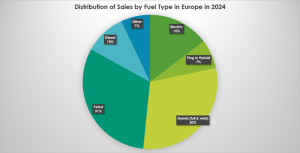
The 2024 European automotive market shows how complex this transition still is. Fully electric cars accounted for only 15% of total sales, while the higher Gini index compared with other powertrains reveals a highly uneven adoption pattern. In Northern Europe, electric vehicles are already widespread; in other markets, they remain marginal. This gap between policy ambitions and market reality has placed European manufacturers, historically among the strongest players in the industry, under significant pressure.

Volvo’s financial data for 2021–2023 help explain this pressure. The company reported separate figures for combustion-engine and electric models, showing a clear profitability gap. In 2023, the industrial margin (revenues net of production costs) was 8.7% for a Volvo electric car and 23.4% for a combustion-engine car (almost three times higher!). This does not mean that electric vehicles are intrinsically inefficient to produce. On the contrary, they have fewer components and can be manufactured more efficiently. The problem lies in the scale of investment required: electric-vehicle plants rely on automation, advanced robotics, battery-specific controlled environments, and high capital intensity. These costs can be absorbed only at very high production volumes. Tesla, which operates at large scale, has margins in line with (and in some cases above) those of traditional carmakers before the transition; many European manufacturers, by contrast, are still struggling to reach that threshold.
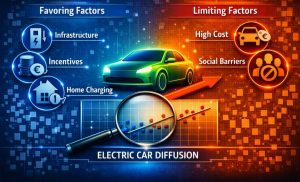
Will this situation change? And, more importantly, which factors accelerate or slow down the spread of electric cars? To address these questions, a series of bivariate correlation analyses was conducted between the share of electric cars in total sales and a set of variables describing each national market. Although this method does not prove causality, it is useful for identifying whether each factor is associated with higher or lower electric-vehicle penetration. The analysis focuses on five dimensions: market structure, infrastructure, regulation, economic convenience, and social context.
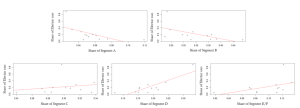
The first relevant dimension is market structure. In countries where small cars—segments A and B—represent a larger share of sales, electric vehicles tend to have a lower market share. The opposite occurs in markets where larger models, from segment C upward, are more common. The strongest correlation is observed for segment D, as shown by the correlation coefficients. This pattern reflects a combination of price dynamics, product availability, and technical constraints.

Price is the most immediate explanation. List prices show that the gap between electric and combustion-engine cars is particularly large in the smaller segments, while it gradually narrows in the higher segments. At the same time, manufacturers earn higher margins on larger vehicles, which gives them a stronger incentive to electrify those categories. Small cars, by contrast, already have limited margins, making electrification more difficult from an industrial and commercial point of view.
Manufacturers are therefore facing a strategic dilemma. To increase electric-vehicle volumes, they must expand their offering in the lower segments; however, bringing prices down remains one of the hardest challenges. One possible solution is battery as a service, or battery leasing. Under this model, the customer buys the vehicle without the battery, which is instead provided through a periodic fee. This approach reduces the initial purchase price, since the battery accounts for roughly 40% of the total cost, and also lowers the customer’s exposure to technological obsolescence or defects. In principle, it could even allow drivers to upgrade to a newer-generation battery without replacing the entire car.
There is also a technical reason behind the stronger performance of larger electric models. Bigger vehicles can accommodate higher-capacity batteries, which makes it easier to offer an adequate driving range even for longer journeys. In smaller cars, by contrast, space, weight, and cost constraints make this balance more difficult to achieve.
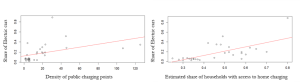
Market structure, however, is only one part of the transition. Charging infrastructure is equally important. The analysis shows a positive correlation between electric-vehicle adoption and both the density of public charging points and the estimated share of households with access to home charging, with the latter showing the stronger relationship (correlation coefficient reached 0.65, compared with 0.45 for public charging). This is not surprising: according to Bloomberg estimates, most electric-car owners charge at home, where electricity is generally more practical and 20% to 60% cheaper per kWh than at public charging stations. The limitation is social and spatial: home charging usually requires a private garage or parking space where a charger can be installed. Not everyone has access to this option. For electric mobility to become truly widespread, the system must also serve those who cannot charge at home, through denser public networks or alternative technologies such as battery swapping and dynamic inductive charging, where vehicles are recharged via coils embedded under the road surface.
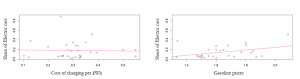
Economic convenience also matters, although less than one might expect. The share of electric cars is positively correlated with gasoline prices and negatively correlated with the cost of charging per kWh. In theory, the greater the operating-cost advantage of electricity over gasoline, the stronger the incentive to switch. In practice, the correlations are weak: -0.028 for charging cost and 0.387 for gasoline price. This suggests that electric mobility differs from the earlier spread of diesel. Diesel adoption was driven largely by cost savings and did not require a major change in user habits. Electric cars, instead, require new routines around charging, trip planning, and vehicle use. Even when operating costs are lower, this behavioural shift can slow adoption.
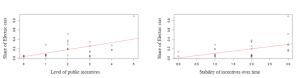
Regulation plays a more direct role. A positive correlation is observed between electric-vehicle sales and the level of public incentives, because incentives partially offset the higher purchase price of electric cars compared with equivalent combustion-engine models. At this stage, without public support, the market would likely develop much more slowly. This logic recalls Friedrich List’s infant industry theory (1841): in the early phase of a technological transition, public intervention can help an emerging industry reach maturity. In the case of electric mobility, however, incentives should not be limited to vehicle purchases. They must support the entire ecosystem, including battery production, mineral supply chains, gigafactories, charging infrastructure, technical skills, national standards, and energy grids. Once the system becomes mature, these measures should gradually be reduced, allowing the market to operate with less public support.
The final group of variables concerns the social context. Electric-vehicle adoption is positively correlated with urban population share, women’s decision-making role, and the share of graduates, while it is negatively correlated with the country’s average age. These variables do not act mechanically, but they help describe the type of social environment in which a new technology is more likely to be accepted.
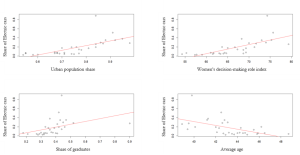
Urbanization is relatively straightforward to interpret. Electric cars fit urban environments well because daily distances are shorter, charging opportunities are more frequent, and local administrations often offer advantages such as access to restricted traffic zones or other forms of preferential treatment.
The correlation with women’s decision-making role is also noteworthy. This variable is calculated by combining the share of women living in urban areas, the share of women graduates, and the share of women in employment. Historically, at the beginning of the twentieth century, electric cars were appreciated by bourgeois women because they were cleaner, quieter, and easier to drive. Today, the interpretation is different: according to a 2021 Mintel study, women tend to display more environmentally responsible consumer behaviours, which may contribute to higher openness toward electric mobility.
Education provides another useful lens. A higher share of graduates may favour electric-vehicle adoption because education can make it easier to assess a new technology through information, comparison, and long-term evaluation, rather than relying only on immediate perceptions or emotional reactions.
The negative correlation with average age points in the same direction. Sociological literature generally shows that younger people are more attentive to environmental issues and more willing to adopt new technologies. Younger markets may therefore be more receptive to electric mobility, especially when the surrounding infrastructure and economic conditions are favourable.
After examining the linear correlations between electric-vehicle sales share and the main contextual variables, it is possible to move to a multiple linear regression model. The model describes the BEV share through the function:

in which x1 represents charging infrastructure per 100 km, x2 represents the share of households with access to home charging, and x3 represents political intervention, defined as the product of the level of incentives and their stability over time. These variables are particularly relevant because they can be influenced by policymakers. The model can therefore support policy evaluation by estimating how changes in infrastructure, home-charging access, and incentive design may affect the spread of electric cars.

At the same time, the model also highlights a crucial limitation: policy measures alone are not sufficient. If public intervention is not matched by strong industrial commitment—especially in terms of affordable models, scalable production, and reliable supply chains—the diffusion of electric vehicles remains limited.
For this reason, the current transformation of the automotive sector can be understood as both an evolution and a revolution. It is an evolution because the underlying technology is improving progressively; but it is also a revolution because electric mobility changes the entire system around the car: industrial organization, infrastructure, energy networks, regulation, and user behaviours.
The technology is now available, but availability alone is not enough. The transition will take off only if policymakers, manufacturers, infrastructure operators, and consumers move in the same direction. Building a system in which electric mobility is convenient, sustainable, and accessible requires coordinated action across the whole ecosystem. The analyses presented here help clarify why the electric revolution is not simply a matter of replacing one engine with another: it requires changing the conditions that make mobility possible.


 LinkedIn:
  Instagram: