

Beyond the shelf: the case of Call of Duty between physical and digital visual merchandising in the era of product dematerialization

Author: Francesca Sblendido
Date: 23-10-2026
Market Context
Over the last two decades, the video game industry has undergone an unprecedented structural transformation. In the early 2000s, purchasing a video game was a predominantly physical ritual involving visits to stores, waiting in line, reading product packaging, and collecting game boxes (AESVI, 2006). Today, almost 90% of software sales take place in digital format through direct downloads from console platforms and online stores (IIDEA, 2024).
But what happens to visual merchandising when the product being sold loses its tangible materiality? How does a discipline originally conceived to enhance the physical shelf evolve when the shelf itself becomes an interface, a screen, or a dashboard?
This research originates from that gap in the literature: while traditional retail marketing studies have extensively examined visual merchandising for tangible goods, limited attention has been devoted to omnichannel (“phygital”) integration for fully dematerialized products such as video games (Liu et al., 2019). To explore this phenomenon, the study focuses on the Call of Duty franchise, launched in 2003 by Activision, within the specialized gaming retail chain GameLife.
The historical analysis conducted in the study identified four major evolutionary phases within the gaming industry:
- 2000-2010 (The Pre-Digital Era and the Store as Central Media): Physical stores, including chains such as EB Games, Blockbuster, MediaWorld, and independent specialists, were at the heart of the gaming experience. In the absence of social media and widespread video reviews, stores functioned as central media channels, where visual merchandising elements such as standees, cardboard cut-outs, and demo stations created a theatrical launch experience.
- 2010-2015 (Early Omnichannel Synergies and E-commerce): With the emergence of retailer e-commerce websites and publisher information portals, visual merchandising began expanding online through banners, homepage takeovers, and early CRM campaigns.
- 2015-2019 (Social Media and Progressive Dematerialization): The rise of social media platforms such as Instagram, YouTube, and Twitch transformed them into interactive channels for generating hype, turning game launches into globally coordinated events supported by both publishers and retailers.
- 2020-Present (The Digital Boom and the Phygital Shift): The COVID-19 pandemic dramatically accelerated digital adoption. With the launch of Call of Duty: Warzone, the game itself became an “always-on” promotional platform and media channel. Digital sales reached 89% in Italy, shifting promotional efforts toward console dashboards and e-commerce channels while redefining the role of physical stores from transactional locations to experiential spaces.
Methodology
To investigate how consumers perceive combinations of physical and digital visual merchandising elements and which configurations generate the greatest value, a mixed-method approach was adopted.
- Qualitative Phase: In-depth interviews were conducted with members of the GameLife management team, including Marketing Manager Michela Citti and Merchandising Manager Christian Gorla, as well as two former senior managers of Activision Italy, Senior Marketing Manager Paolo Pastorelli and Director General Manager Gianpaolo Chisari. In addition, 32 customers were interviewed in-store at the GameLife store in Rozzano (Milan).
- Quantitative Phase: A structured questionnaire was administered to 507 respondents, from which a validated sample of 173 active gamers aged between 20 and 50 years was extracted. Data analysis, performed using SPSS, included bivariate analyses, Conjoint Analysis based on an orthogonal design of nine profiles, K-Means Cluster Analysis, and Multiple Linear Regression models to identify the drivers of satisfaction.
Qualitative Findings
Interviews with GameLife managers revealed a shared belief that visual merchandising represents both storytelling and a strategic lever:
“It’s not a shelf, it’s a world. If you stop investing in visual merchandising, you lose the customer.”
Former Activision managers highlighted the role of physical retail as experiential media and emphasized the transition toward a phygital environment:
“You see the product on Instagram, you experience it in the game, and you touch it in-store.” (G. Chisari)
Interviews with the 32 customers revealed two key themes:
- Gender differences: Women showed greater sensitivity to aesthetics, bright colors, visual order, and merchandise such as Funko Pop figures, gadgets, and action figures, experiencing the store more emotionally. Men, on the other hand, expressed a stronger interest in interactive experiences such as playable demos, tournaments, and in-store events.
- The symbolic value of physical products: Despite the convenience of digital downloads, physical products and related merchandise continue to hold emotional and collectible value for consumers.
Quantitative Findings
The validated sample of 173 respondents consisted primarily of men (78.0%), while women accounted for 20.2% of participants. The most represented age group was 20-27 years old (38.2%), followed by consumers aged 42-50 (26.0%) (Figure 1).
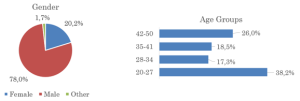
Figure 1. Distribution of the analyzed sample by gender and age
Most respondents came from Northern Italy (69.4%) and visited physical video game stores only occasionally: 56.1% reported visiting one or two times per year, while 29.5% visited approximately once every two to three months (Figure 2). These findings reflect a highly digitalized environment in which physical stores continue to play an important role as places of experience and brand interaction.
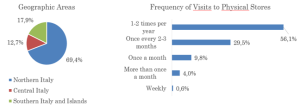
Figure 2. Composition of the analyzed sample by geographic area and frequency of visits to physical retail stores
To identify the most effective visual merchandising configurations, a Conjoint Analysis was conducted to measure the relative importance consumers assigned to four key attributes:
- Store Layout (standard, themed, or immersive)
- Displayed Product (digital card, dummy box, or bundle with gadgets)
- In-Store Digital Tools (QR code/trailer, playable demo, or augmented reality)
- Online-Offline Visual Consistency
The results showed that perceived value primarily originates from the coherent integration of physical and digital dimensions.
Online-offline visual consistency emerged as the most important driver (40.9%), followed by interactive in-store digital tools (34.4%). Physical store layout remained relevant (19.9%), while the displayed product itself had a much smaller impact (4.8%).
Consumers particularly favored:
- High visual consistency across all brand touchpoints
- Playable demos
- Immersive and thematic store layouts
- Bundles enriched with gadgets or collectibles
In contrast, QR codes and passive trailers were the least appreciated elements, as they were perceived as adding little value compared with information already available online.
These findings (Figure 3) confirm that contemporary consumers are not simply looking for a product to purchase, but rather for a coherent, engaging, and integrated phygital experience.
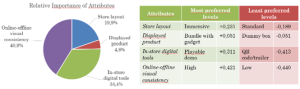
Figure 3. Relative importance of visual merchandising attributes in the conjoint analysis
A simulation conducted using First Choice, BTL, and Logit models (Table 1) further confirmed that the most preferred offer configuration (score: 7.19 out of 9, with 52.2% preference under the First-Choice model) combined:
Immersive Store Layout + Bundle with Gadgets + Playable Demo + High Online-Offline Visual Consistency.

Table 1. Simulation results for three additional orthogonal profiles
K-Means Cluster Analysis identified four distinct gamer segments (Table 2):
- Omnichannel Consumers (21.4%): Assign nearly 80% of their preference weight to online-offline visual consistency and seek a seamless experience across channels.
- In-Store Experiential Consumers (22.0%): Prioritize immersive store layouts, collectible merchandise, and augmented reality.
- Digital First Consumers (22.5%): Focus almost exclusively on interactive digital tools, particularly playable demo stations.
- Product Pragmatists (34.1%): Represent the largest segment and are primarily driven by displayed products, promotional clarity, and value-added bundles.
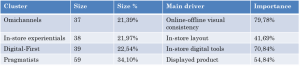
Table 2. Consumer segmentation into four clusters
The Store Layout Paradox
One of the most interesting findings of the research is what can be described as the “Store Layout Paradox.”
When asked directly, many consumers claim that immersive store layouts do not influence their immediate purchase decisions (Figure 4).
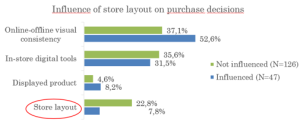
Figure 4. Influence of store layout on consumers’ purchase decisions
However, the results of Multiple Linear Regression analyses tell a different story. Physical store layout emerged as the primary driver of overall satisfaction for both the retailer GameLife (57% of impact) and the Call of Duty brand (61% of impact).
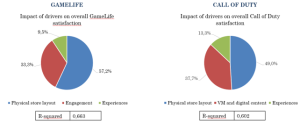
Figure 5. Relative Impact of Key Drivers on Overall Satisfaction with GameLife and Call of Duty
This suggests that store layout acts as a powerful brand recall and brand memory mechanism. While it may not immediately trigger a purchase, it leaves a lasting emotional impression that reactivates brand preference over time and strengthens overall brand equity.
Managerial Implications
The findings lead to several strategic recommendations for retailers and publishers:
- Design memorable store environments. Store layout functions primarily as a brand recall tool rather than a direct sales trigger. Investments in immersive corners, thematic installations, and launch events can reinforce long-term brand memory.
- Ensure visual consistency across physical and digital channels. Websites, social media, e-commerce platforms, and physical stores should maintain aligned messages, visual identities, and promotional materials.
- Integrate active digital tools. Playable demos, augmented reality, and interactive events generate stronger engagement than passive tools such as QR codes and trailers, providing consumers with experiences that cannot be replicated online.
- Customize initiatives for different target groups. Significant differences emerge across clusters, gender, and age groups. Women tend to value merchandise and collectibles more, while men give greater importance to playable demos. Likewise, Omnichannel and Digital First consumers appear particularly receptive to phygital strategies.
This study focused on the Italian market and on a specific brand-retailer combination (Call of Duty – GameLife). Future research could extend the model internationally, particularly to North American and Asian markets, while exploring the impact of next-generation immersive technologies such as the Metaverse and Virtual Reality, as well as evolving purchasing behaviors among Generation Z and Generation Alpha consumers.


 LinkedIn:
 Instagram: